To Share or Not to Share: The Surprisingly Complicated Ethics of Borrowed Streaming Passwords
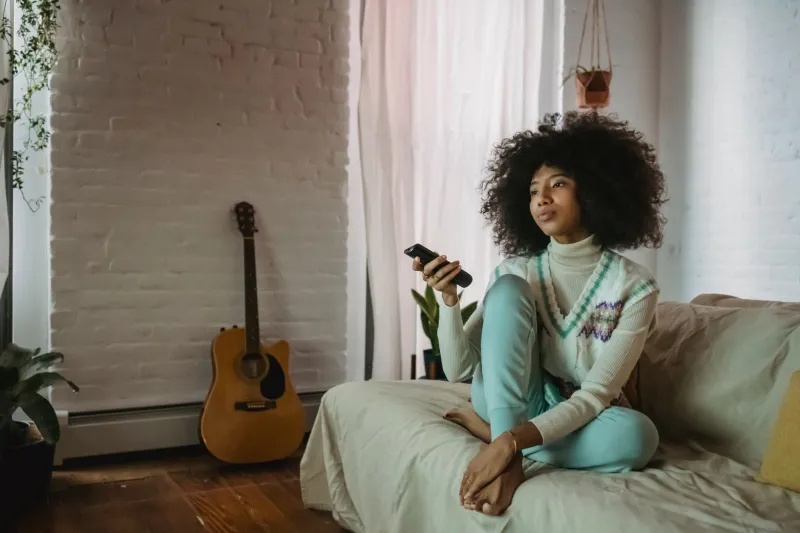
It started so innocently. Your college roommate gave you her Netflix login in 2014. You gave her your Hulu. Someone's dad had HBO. Someone's aunt had Peacock for reasons no one fully understood. A beautiful ecosystem of informal generosity bloomed across the American internet, and for one brief, shining era, every person in the country had access to every streaming platform for the combined cost of exactly nothing.
And then, as all golden ages must, it ended. Or at least it got complicated. And now — congratulations — you have opinions about streaming ethics, whether you wanted them or not.
The Original Agreement (Which Was Never Actually an Agreement)
Here is the foundational truth of password sharing: it was never formally negotiated. There was no contract, no terms of service between you and your sister, no clause specifying what happens when she moves to Portland and starts using your account to watch true crime documentaries at 2 a.m. every single night, causing the algorithm to believe you are a completely different, considerably more anxious person.
The arrangement was understood. It was vibes-based governance at its finest. You shared because sharing was easy, because the platforms seemed fine with it (they were not fine with it, it turns out, they were simply biding their time), and because the alternative — paying for six separate streaming subscriptions at current prices — is the kind of financial decision that requires a spreadsheet and a brief cry.
Now the platforms have cracked down, rolled out household verification, introduced "add a member" fees, and generally made the whole thing feel vaguely criminal. And so we are left, as a society, to ask the questions we never expected to be asking: Is borrowing a password wrong? Who actually deserves access? And at what point does mooching become a moral failing?
The Taxonomy of Password Borrowers
Not all password borrowers are created equal, and any serious ethical framework must account for the full spectrum.
The College Student — Morally exempt, full stop. A college student paying for their own Netflix subscription is a college student not buying groceries. Society has made a collective decision to subsidize this group, and we stand by it.
The Parent Who Doesn't Know How Any of This Works — Also exempt. Your mother has had the same login since you set it up for her in 2017 and genuinely believes Netflix is a channel. She is not a freeloader. She is a woman trying to watch Bridgerton in peace.
The Ex — This is the gray zone. There is a brief post-breakup window — let's call it ninety days — during which continuing to use a former partner's streaming account is socially acceptable, a kind of soft-landing severance package for the emotionally disrupted. Beyond that window, you are a squatter. Change the password. Move on.
The Friend Who "Totally Owes You One" — Theoretically fine, practically problematic. The debt will not be repaid. It will be referenced, vaguely, at a dinner party in 2026. Accept this.
The Acquaintance Who Asked Once at a Party — A mistake was made. You gave them access in a moment of social generosity and now they are watching your account from a city you've never visited, running up a profile called "Guest" that is entirely recommendations for anime you will never watch. You may revoke this access without guilt.
What the Platforms Actually Want (And Why It's Annoying)
Let's be honest about what's happening here. Streaming services spent years growing their subscriber bases partly because password sharing made their platforms ubiquitous. Your cousin's Netflix habit, subsidized by your login, is the reason she now pays for her own account. The exposure drove adoption. The companies knew this. They allowed it strategically and are now, with the confidence of a company that has already won, deciding to monetize it.
This is not a moral failing on anyone's part. It is capitalism doing what capitalism does, which is to say: identifying a thing people like, letting them have it for a while, and then charging them for it once they can't imagine living without it. The genius is almost admirable. The execution is deeply annoying.
The result is that ordinary people are now engaged in a philosophical exercise they did not sign up for, parsing the difference between sharing and theft over a $15.99 monthly subscription. Immanuel Kant did not anticipate this specific application of his work, but here we are.
The Utilitarian Case for Mooching
If we're doing philosophy — and apparently we are — let's run the utilitarian numbers. The greatest good for the greatest number of people is arguably served by a world in which the broke millennial crashing on a friend's couch can watch The Bear without adding a line item to a budget that is already more fiction than fact.
The harm to Netflix of one extra household viewer is, in any practical sense, negligible. The harm to the viewer of losing access is measurable in terms of both dollars and the specific, modern misery of having nothing to watch on a Sunday night. The math seems clear.
Of course, the platforms have their own utilitarian math, and it involves quarterly earnings calls and shareholder value, so your mileage may vary depending on whose utility you're maximizing.
A Modest Proposal for the Password Economy
What we need, as a culture, is not crackdowns or guilt — we have enough of both. What we need is a clearer social framework. A set of norms. A Geneva Convention for the streaming era.
Proposed terms: Immediate family shares freely, no questions asked. Close friends operate on a reciprocal basis — you share yours, they share theirs, the whole thing balances out across platforms. Exes get ninety days. Acquaintances are cut off at the first awkward interaction. And anyone who creates a profile called "Guest" and then watches eighty hours of content on it in a single month is required, by the laws of basic decency, to at least send a Venmo request acknowledgment.
Until then, we navigate this the way Americans have always navigated uncomfortable ethical territory: by not talking about it directly, making vague jokes about it at dinner, and hoping the algorithm doesn't notice.